A bridal bouquet does more than fill your hands for photos. It sits against your dress, shows up in every close-up, and quietly sets the tone for the entire floral story. A strong bridal bouquet style guide helps you choose a design that feels right in motion, in pictures, and in the room – not just one that looks pretty on a Pinterest board.
Why a bridal bouquet style guide matters
Most brides start with flower types or colors, but style is usually the better first decision. Shape, scale, and structure affect how the bouquet reads from a distance, how it complements the dress, and whether it feels polished, romantic, modern, or dramatic.
That matters because a bouquet can easily compete with the gown instead of supporting it. A heavily textured, oversized design may feel stunning on its own, but paired with a detailed lace bodice and cathedral veil, it can become visually crowded. On the other hand, a bouquet that is too small or too tight can disappear against a fuller dress or grand venue.
The right choice comes from balance. You are matching floral design to silhouette, venue, season, and the kind of images you want to keep for decades.
The main bridal bouquet styles
Round bouquets
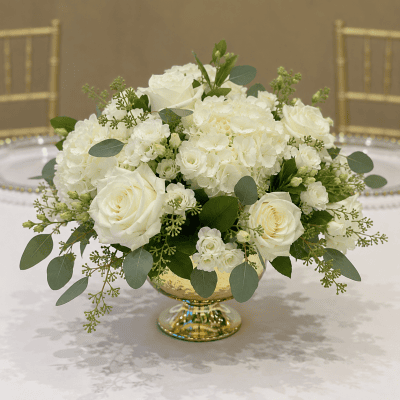
Round bouquets are classic, symmetrical, and dependable in photos. They are built with a clean dome shape and often feature roses, ranunculus, peonies, garden roses, or other blooms with naturally full faces.
This style works especially well for formal weddings, traditional gowns, and brides who want a refined look without too much movement. A round bouquet can read either timeless or luxurious depending on the flower selection. Compact white roses feel tailored. Large garden roses and premium blooms feel richer and more elevated.
The trade-off is personality. If you want something airy, fashion-forward, or a little undone, a strict round bouquet may feel too controlled.
Hand-tied bouquets
Hand-tied bouquets are gathered to look more organic, as if the stems were arranged by hand rather than shaped into a perfect form. They usually have more visible movement, varied stem lengths, and softer edges.
This is one of the most versatile choices in any bridal bouquet style guide because it can lean rustic, garden-style, European, or modern depending on the flowers used. It works beautifully for outdoor ceremonies, estate weddings, and brides who want elegance without stiffness.
The key is restraint. Organic should still feel intentional. If the bouquet gets too loose or too wide, it can photograph messy rather than relaxed.
Cascading bouquets
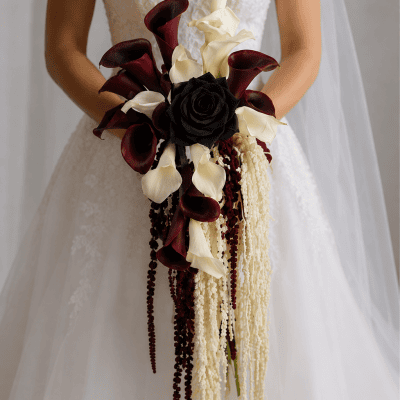
A cascading bouquet creates a flowing line that extends downward. It can be dramatic and full, or more delicate with a soft trailing effect.
This style is ideal for brides who want a statement piece. It pairs especially well with simpler gowns because it adds movement and visual length. It can also flatter taller brides or those wearing elongated silhouettes like fit-and-flare or sheath dresses.
Cascades are not for everyone. In a minimalist city wedding, an oversized cascade may feel too formal. In very tight ceremony spaces, it can also read larger than intended. Proportion matters more here than with almost any other bouquet style.
Nosegay bouquets
A nosegay is smaller, neat, and tightly gathered. It has a clean profile and is often finished with a polished wrap.
This style suits petite brides, courthouse ceremonies, sleek dresses, and smaller weddings where understatement feels more luxurious than excess. A nosegay can also be a smart choice when the gown has heavy detail and the bouquet needs to complement rather than compete.
Its limitation is scale. In a large ballroom or outdoor venue, a very small bouquet may get lost.
Crescent and asymmetrical bouquets
These bouquets use shape more creatively, often extending slightly to one side or both sides for a modern editorial look. They can feel artistic, directional, and less expected than traditional forms.
They are especially strong for contemporary weddings and fashion-driven styling. Orchids, anthuriums, reflexed roses, and sculptural greenery work well here.
Because this style is more design-sensitive, execution matters. Done well, it looks high-end. Done poorly, it can feel uneven.
Matching bouquet style to the dress
The dress should lead. If the gown is heavily embellished, a simpler bouquet usually creates a stronger finished look. If the gown is sleek and clean, the bouquet has more room to add texture or drama.
For ball gowns and fuller skirts, medium to larger bouquets usually feel more balanced. Tiny bouquets can look visually disconnected from the volume of the dress. For slim silhouettes, elongated hand-tied or cascading styles often work better than wide, heavy rounds.
Neckline matters too. A romantic off-the-shoulder dress often pairs well with soft garden-style florals. A square-neck or minimalist satin gown can support cleaner lines, fewer varieties, and a more structured bouquet. If your dress already makes a strong statement, your bouquet should finish the look, not start a second conversation.
Size is just as important as style
One of the most common mistakes is choosing the right bouquet shape in the wrong size. Brides often underestimate how much visual space the bouquet occupies in photos.
A bouquet that feels generous in person can look average in wide-angle ceremony shots. At the same time, an oversized bouquet can cover too much of the dress bodice in portraits and make movement feel awkward during the processional.
Florists usually assess size based on body frame, dress volume, and venue scale. A luxury hotel ballroom can support a more substantial bouquet than a small chapel ceremony. If you are getting married in Las Vegas, that range can be dramatic – from intimate indoor ceremonies to large Strip venues with grand architecture and high ceilings. The bouquet should fit the setting, not fight it.
Flower choice changes the personality
In any bridal bouquet style guide, flower type matters less than most people think at the start – but it matters a lot once the style is set. The same round bouquet can feel soft, formal, modern, or lush depending on the blooms.
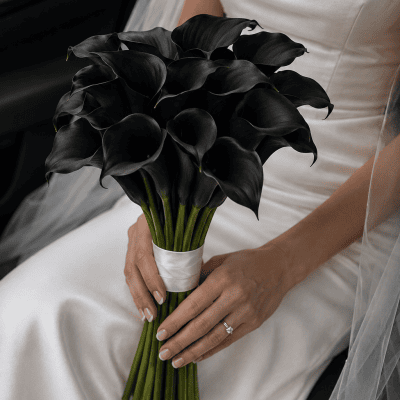
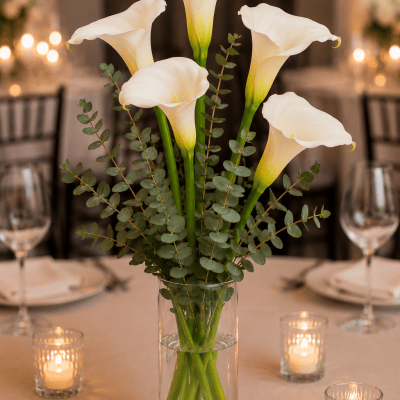
Roses and garden roses are the most flexible. They can anchor almost any bouquet style and come in enough tones to support both classic and fashion-forward palettes. Peonies feel romantic and premium, but they are seasonal and can affect budget quickly. Ranunculus adds detail and softness. Orchids create a cleaner, more elevated line, especially in modern bouquets. Calla lilies can look incredibly sophisticated, though they suit a narrower range of aesthetics.
Greenery and accent flowers also shift the mood. Eucalyptus softens. Smilax and jasmine vine add movement. Minimal greenery creates a tighter, more editorial finish. There is no single best mix – only the mix that supports the style you actually want.
Color: bouquet first or palette first?
Usually, the wedding palette should come first, but bouquets do not need to repeat every wedding color. In fact, they often look better when edited.
If the bridesmaid dresses are bold, the bridal bouquet can be softer and more restrained. If the wedding palette is neutral, the bouquet can carry more tonal depth through cream, nude, blush, toffee, champagne, or layered whites. White bouquets remain popular because they photograph cleanly and feel timeless, but all-white is not automatically simple. Texture becomes more important when color is limited.
The strongest bouquets often use color with discipline. Two or three tones usually look more refined than trying to include every accent from the wedding design.
Season and availability affect design choices
Some bouquet ideas are easy to love online and harder to build beautifully on your date. Seasonality, supply, and flower quality all affect the result.
This does not mean you cannot request a specific bloom outside its peak season, but it may cost more or look different from the reference image. Flexibility often leads to a better bouquet. If you want the feel of peonies but they are not ideal for your wedding date, a florist may guide you toward garden roses or other premium blooms that deliver similar fullness.
That practical approach matters, especially when timing is tight and event execution has to be flawless. An experienced wedding florist will design around availability without compromising the look.
What to bring to your florist consultation
Come in with your dress style, venue, wedding month, and a realistic budget before you focus on exact flowers. Inspiration photos help, but they work best when they show a pattern, not ten completely different directions.
It also helps to know what you do not like. Maybe you want movement but not a cascade. Maybe you like white florals but not stark contrast. Maybe you want luxury without an oversized bouquet. Those preferences save time and lead to a cleaner proposal.
If you are ordering wedding florals on a compressed timeline, clarity matters even more. A florist with strong event experience can move quickly, but fast decisions are better when they are informed.
The best bridal bouquet style guide is the one that feels like you
The right bouquet should make sense the moment you pick it up. It should suit the dress, hold its own in photos, and feel natural in your hands instead of borrowed from someone else’s wedding. Trends can be useful, but the bouquet you carry should still look right when the trend cycle moves on.
If you are unsure where to start, begin with shape, then size, then flower personality. That order tends to produce better results than chasing individual blooms first. A well-designed bouquet is not just beautiful on its own – it makes everything around it look more finished, more intentional, and more like your wedding.