Wedding flowers usually look effortless in photos. Ordering them rarely feels that way at first.
If you are figuring out how to order wedding flowers, the fastest way to make good decisions is to stop thinking in terms of “all the flowers” and start thinking in terms of moments. What needs to look beautiful in your hands, at the altar, on the tables, and in the room as a whole? Once you organize the order that way, the process gets clearer, the budget gets easier to manage, and the final design feels more intentional.
How to order wedding flowers in the right order
Most couples make one of two mistakes. They either wait too long and end up rushing choices, or they start collecting random inspiration before they know what they actually need. A better approach is simple: begin with your date, venue, guest count, and color direction, then build your floral plan around the spaces and photos that matter most.
Before you talk to a florist, know your ceremony location, reception location, approximate start time, and whether your wedding is indoors, outdoors, or moving between both. In Las Vegas and Henderson, that detail matters. Heat, wind, delivery windows, hotel loading procedures, and venue access can all affect flower choices and installation timing.
You do not need every detail finalized before you reach out. You do need enough information for a florist to guide you accurately.
Start with your floral priorities
A strong wedding flower order begins with priorities, not Pinterest volume. If your bouquet and ceremony backdrop are what will show up in every major photo, those deserve more attention than filler pieces no one will remember. If your reception is in a dramatic room, centerpieces and entry arrangements may carry more visual weight.
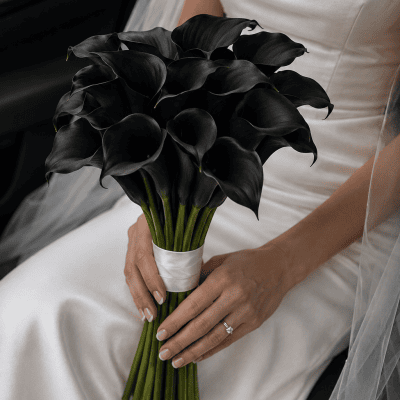
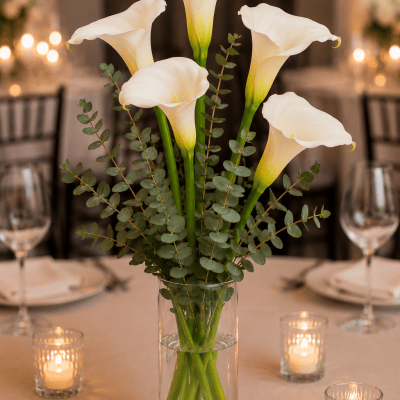
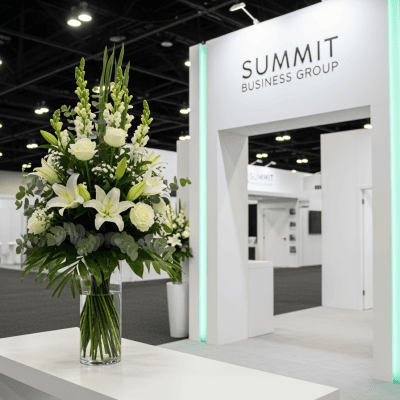
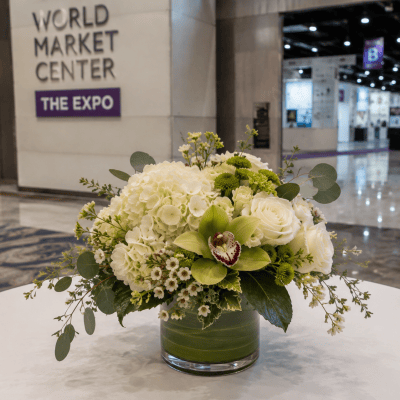
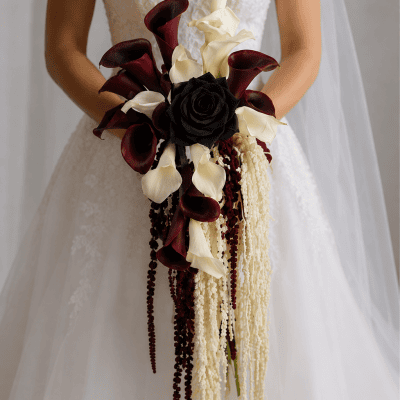
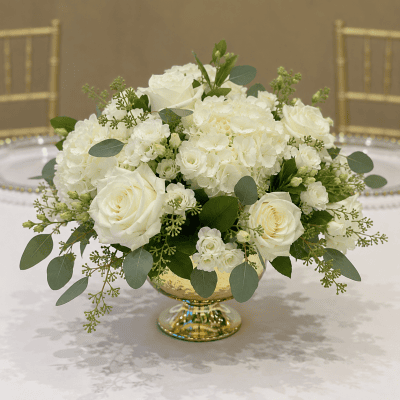
Think about floral needs in four groups: personal flowers, ceremony flowers, reception flowers, and accent pieces. Personal flowers include the bridal bouquet, bridesmaid bouquets, boutonnieres, corsages, and anything for family members. Ceremony flowers usually cover altar pieces, aisle markers, a floral arch, or statement arrangements at the entrance. Reception flowers often include guest table centerpieces, sweetheart table flowers, bar flowers, cake flowers, and larger installations. Accent pieces are the finishing touches such as welcome sign florals, cocktail table arrangements, or restroom flowers.
Not every wedding needs all of that. The best orders are edited. A smaller number of well-placed, expertly designed pieces usually feels more elevated than stretching the budget across too many small arrangements.
Set a real budget before you choose stems
This is the part people try to skip, and it usually creates more stress later. A florist can design at different price levels, but only if the budget is clear from the start.
When couples say, “We just want to know what flowers cost,” the honest answer is that it depends on seasonality, flower variety, size, mechanics, labor, delivery, setup, and teardown. Garden roses, orchids, peonies, and large installations will price very differently than carnations, mums, or greenery-forward designs. A compact centerpiece and a lush elevated centerpiece are not the same product with a different label. They require different flower counts, vessels, and labor.
Give your florist a realistic range, even if it is broad. That allows them to recommend where to invest and where to simplify. If your budget is tight, put the money where it shows most – bridal bouquet, ceremony focal point, and guest table designs. If your budget has room, then layer in statement pieces that create a fuller experience.
Know what style you are actually ordering
Saying “romantic” or “modern” helps, but it is not enough on its own. Florists need visual direction that translates into shape, texture, and color.
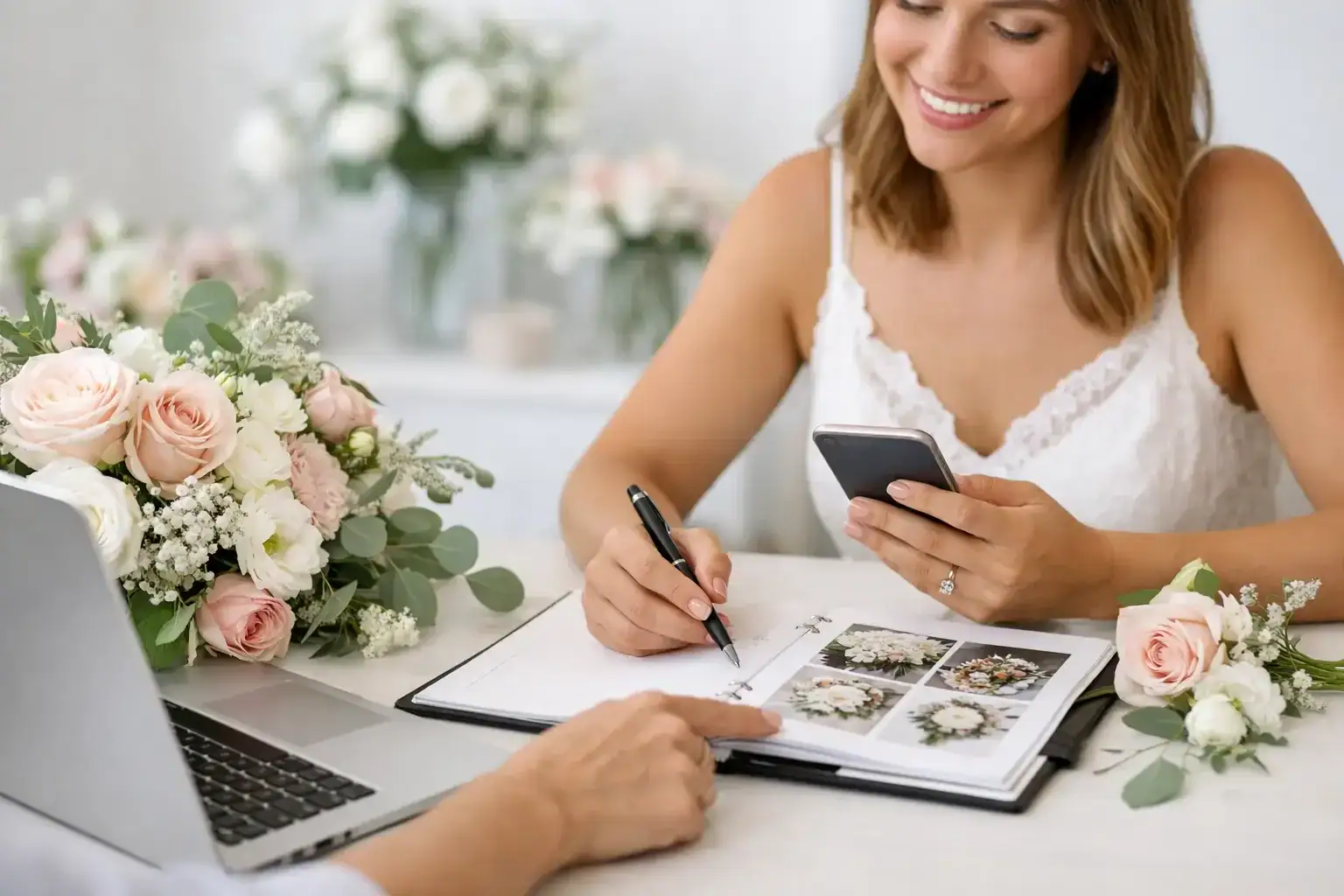
Bring a small group of reference images and pay attention to what repeats across them. Are the bouquets airy and organic, or tight and symmetrical? Are the centerpieces low and lush, tall and dramatic, or minimal and sculptural? Do you keep saving white and green florals, or richer tones like blush, mauve, burgundy, or terracotta?
This is also where trade-offs matter. If you love a premium luxe look, be prepared for designs that often require higher-value blooms and more product per piece. If you want maximum coverage for the budget, a florist may suggest mixing focal flowers with textured fillers, greenery, or statement vessels that create presence without overspending on stem count alone.
When to order wedding flowers
If you are wondering when to place the order, earlier is better, especially for weddings during peak season. For a full-service wedding, reach out as soon as you have the date and venue secured. That gives you time to discuss availability, reserve delivery and setup, and refine the design without pressure.
For smaller weddings, elopements, or simple personal flowers, the timeline can be more flexible, but waiting until the last minute limits your options. Specific flower requests, custom arches, and large installs need planning time. So do weddings at hotels, resorts, and event venues with strict delivery rules.
If your event is on a holiday weekend or during a busy event season, build in even more lead time. An established local florist with event experience can help you avoid timing mistakes that are easy to miss until they become expensive.
What your florist needs from you
A smooth ordering process depends on clean information. You do not need to speak floral design language. You do need to be organized.
Be ready to share your wedding date, venue names, addresses, contact person, timeline, estimated guest count, wedding party count, color palette, inspiration photos, and budget range. If you already know key measurements, such as sweetheart table size or arch dimensions, include those too.
It also helps to mention practical conditions. Will flowers be exposed to direct sun? Is the ceremony outdoors and the reception indoors? Are there stairs, elevator limitations, or narrow load-in windows? Will someone be available to receive bouquets and boutonnieres at a hotel or getting-ready suite?
These details sound operational because they are. But they directly affect design, delivery, and freshness on the day of the wedding.
Ask about substitutions, setup, and breakdown
One of the smartest ways to order wedding flowers confidently is to ask the questions couples often forget.
First, ask how substitutions are handled. Flower availability changes. A professional florist can preserve the look and value of your designs even if a specific bloom is unavailable, but you want that expectation set early.
Second, ask what is included in service. Delivery is not the same as setup, and setup is not the same as installation. If you are ordering ceremony arrangements, arches, hanging florals, or large reception pieces, confirm who places everything, when it happens, and whether teardown is part of the proposal.
Third, ask about candles, vases, rental pieces, and repurposing. Sometimes ceremony flowers can be moved to the reception to stretch the budget. Sometimes that is realistic, and sometimes the timeline makes it difficult. A florist who has handled fast-paced local venue schedules can tell you what is truly possible.
How to make your order look more expensive than it is
There is a difference between spending more and designing smarter.
If you want a premium look without pushing every category to the max, concentrate florals where guests naturally focus. One dramatic ceremony feature often does more than scattered small pieces. Reception tables can also be mixed. You do not need identical centerpieces on every table if alternating styles create dimension and keep the room cohesive.
Color can help too. A refined palette often feels more expensive than a crowded one. White, green, blush, and soft neutrals photograph beautifully and allow texture to stand out. On the other hand, bold color can be stunning if the venue is relatively simple. It depends on the room, the lighting, and how much visual competition is already there.
Another smart move is choosing fewer varieties with stronger impact. Large roses, orchids, hydrangeas, and certain tropicals can create a full, polished presence. Preserved elements may also work in select designs if you want a specific texture or a keepsake quality, though they are not right for every wedding style.
Review the proposal like an event plan
Once you receive a floral proposal, read it carefully. Do not just skim the inspiration language and total price. Check the quantities, sizes, delivery locations, setup details, rental items, and timing.
This is where many misunderstandings happen. A centerpiece described as “standard” may be exactly what one couple expects and much smaller than another imagined. If something is unclear, ask for clarification on scale, flower mix, or intended placement. Good florists expect those questions.
You should also confirm payment schedule, change deadlines, and final head count timing if centerpieces are tied to table counts. The more precise the paperwork, the calmer the wedding week tends to be.
A practical way to order with less pressure
If the full floral picture feels overwhelming, make decisions in layers. Book the essentials first: personal flowers, ceremony focal flowers, and reception centerpieces. Then add statement pieces if the budget allows. That approach protects the most visible elements and keeps the order grounded in what guests and photos will actually capture.
For couples planning in Las Vegas, where timelines can tighten quickly and venue logistics matter, working with a florist that handles both design and dependable delivery can save more than time. It can save the day from preventable stress. That is especially true when flowers need to arrive at hotels, chapels, private venues, or reception spaces on a narrow schedule.
Ordering wedding flowers is not really about memorizing bloom names or copying a board of inspiration. It is about choosing the right pieces, for the right spaces, with the right support behind them. When that part is handled well, the flowers stop being another task and start becoming one of the details you remember for the right reasons.