A ceremony arch has one job before the vows even begin: it tells guests where to look. The right wedding arch example does more than frame a couple in photos. It establishes the scale, color story, and level of occasion for the entire ceremony, whether you are marrying beneath ballroom chandeliers on the Strip or against an open desert view in Henderson.
For Las Vegas weddings, the best design is rarely the most flower-heavy option by default. It is the arch that fits the venue, holds up through the ceremony schedule, photographs beautifully in the available light, and feels unmistakably like the couple.
Wedding Arch Example: 6 Designs That Set the Scene
1. The full floral garden arch
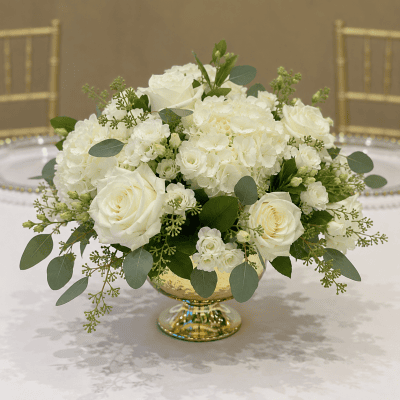
A traditional garden arch is densely covered in blooms and greenery from one side to the other. Think white roses, hydrangea, lisianthus, ranunculus, and layered foliage with an airy, just-picked finish. This is a strong choice for country club ceremonies, romantic garden venues, and formal hotel weddings where the ceremony needs a major focal point.
The luxury comes from depth, not simply flower count. A quality full arch has varied bloom sizes, intentional movement, and enough dimensional greenery to prevent it from reading as a flat wall in photos. White and ivory are timeless, but soft blush, champagne, and pale peach can add warmth without overpowering the bridal party.
The trade-off is budget and placement. A full arch requires a substantial floral investment and looks best when there is enough aisle width and backdrop space for its scale. If the ceremony is indoors, confirm ceiling clearance and access timing before choosing a large rounded structure.
2. The asymmetric floral arch
An asymmetric arch places the fullest floral moment on one upper corner and along the opposite base, leaving open space between them. It feels current, artful, and polished without requiring every inch of the frame to be covered.
This style works especially well for modern weddings because it leaves the couple visually open to the view, venue architecture, or sunset. It also creates a natural angle for photographers: the flowers frame the couple rather than hiding them. A design of white reflexed roses, orchids, and trailing greenery feels upscale and editorial, while brighter seasonal flowers can make the same shape feel celebratory and playful.
For couples watching the floral budget, this is often the smart middle ground. You still get a statement ceremony installation, but the floral concentration is placed where it will have the greatest visual impact.
3. The broken arch with grounded arrangements
A broken arch uses two separate floral pieces instead of a complete frame. One arrangement rises at one side, while another anchors the opposite side closer to the ground. Between them, the open center keeps the ceremony feeling light.
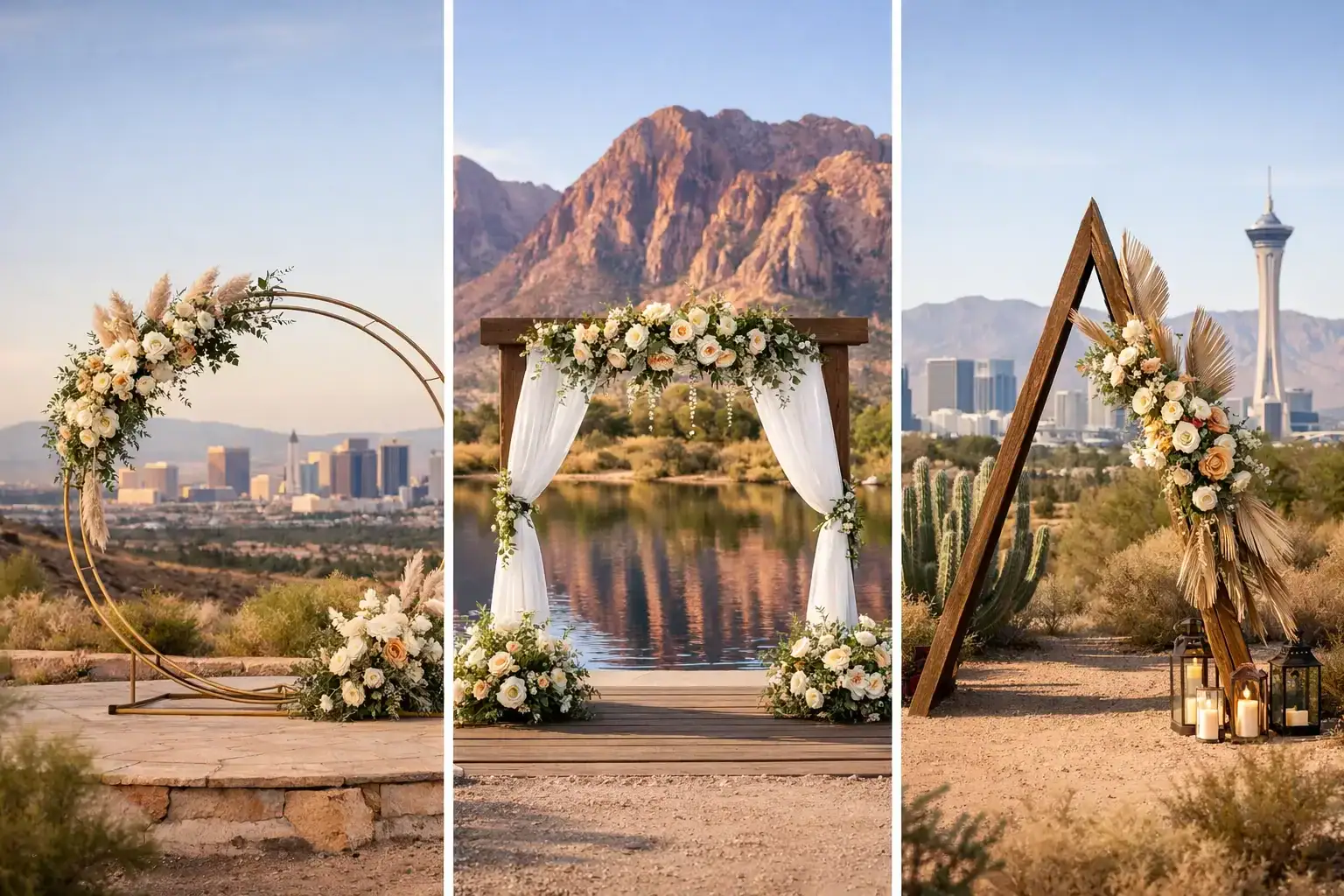
This is a practical wedding arch example for desert venues, terraces, and spaces with a strong natural backdrop. Rather than compete with red rock, mountain views, or a dramatic Las Vegas skyline, the flowers add softness around the edges. It is also helpful for couples who want an elevated ceremony look but do not want to stand inside a fully enclosed structure.
Use grounded clusters with garden roses, delphinium, stock, Italian ruscus, and textural blooms. For a desert-forward palette, consider cream, sand, terracotta, muted rust, and a restrained touch of dusty rose. Avoid making every element beige, though. A little contrast keeps the florals visible in photographs.
4. The modern acrylic or metal frame
Clean-lined arches made from gold metal, black metal, or clear acrylic suit rooftop ceremonies, contemporary venues, and sophisticated ballroom celebrations. The frame itself becomes part of the design, with florals concentrated at the corners, top line, or base.
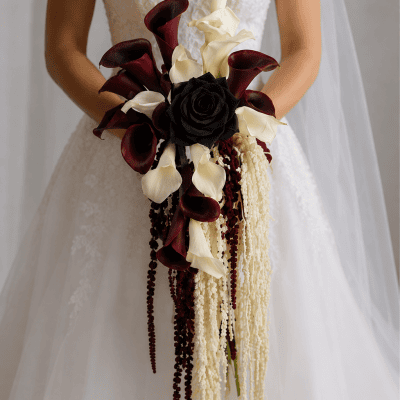
Gold frames pair naturally with white, ivory, peach, and champagne florals. Black framing gives a sharper, more fashion-forward contrast, especially with all-white flowers or bold tones such as burgundy, plum, and deep red. Acrylic can almost disappear in photos, which lets the florals seem suspended around the couple.
This option depends heavily on execution. Sparse arrangements can look intentional and luxe, but only when the flowers are designed with balance and the frame is proportionate to the ceremony area. A frame that is too small may disappear behind the wedding party. One that is too tall can feel disconnected from the couple.
5. The draped fabric and floral accent arch
Soft fabric changes the mood immediately. Chiffon, voile, or other lightweight draping can soften a simple wood or metal structure, while floral accents placed at the top corner and lower side keep the installation refined.
This style is ideal for couples who want romance without a dense floral wall. It is also adaptable: the same arch can feel coastal with white draping and blue flowers, desert-modern with warm neutral fabric and dried accents, or classic with ivory fabric and lush white roses.
In Las Vegas, fabric must be secured correctly for outdoor ceremonies. Wind is not a minor detail. A beautiful drape that shifts, twists, or catches during the processional can affect the look of every ceremony photo. Work with a florist and event team who plan for the site conditions, not just the inspiration image.
6. The statement rose and orchid arch
For an unapologetically luxe ceremony, use premium focal flowers in a more restrained palette. Large-headed roses, phalaenopsis orchids, calla lilies, and hydrangea create a high-end finish that photographs beautifully at close range.
This is not necessarily about filling an arch with the most expensive blooms possible. The strongest designs use premium flowers where guests and cameras will notice them: around the couple’s head and shoulder line, at key points of the frame, and in the aisle-side arrangements. Cascading orchids can add movement, while reflexed roses bring a couture-like texture.
A rose and orchid arch is a natural fit for formal resort weddings, luxury receptions, and couples who want their ceremony florals to match a glamorous reception design. Carry a few of the same flowers into the sweetheart table or head table so the event feels connected rather than divided into separate looks.
How to Choose the Right Arch for Your Venue
Start with what is already behind you. A ballroom stage, garden hedge, chapel wall, terrace railing, mountain view, or city skyline each calls for a different level of coverage. If the backdrop is busy, a fuller arch can create visual order. If the view is the selling point, a broken or asymmetric design protects that view.
Then consider the ceremony footprint. Measure the available width, the couple’s standing position, aisle clearance, and the number of people who will stand at the front. Your arch should frame the couple without crowding the officiant, wedding party, or musicians. It should also remain visible from guest seating, not only from the photographer’s preferred angle.
Timing matters as much as style. Outdoor Las Vegas ceremonies may involve heat, direct sunlight, wind, and a tight venue load-in window. Some blooms are more delicate than others, and a professional florist can recommend varieties and mechanics that maintain their shape through photos, vows, and guest movement. For a hotel or venue with strict delivery rules, confirm access, elevators, installation time, and breakdown requirements early.
Make the Arch Work Beyond the Ceremony
A ceremony arch is a significant design investment, so consider whether it can move after the vows. In some venues, an experienced team can relocate portions of a broken arch behind a sweetheart table, near a cake display, or at the reception entrance. A large fixed installation may not be movable, especially if it is heavily built or mounted for safety, but smaller meadow pieces and freestanding arrangements often can be repurposed.
Ask this question during floral planning: which parts are designed to travel, and which parts are intended to remain in place? The answer affects mechanics, labor, timing, and cost. It also prevents the disappointment of assuming an arch can be moved when it was never built for relocation.
At VIP Floral, wedding floral planning starts with the real conditions of the celebration: venue, schedule, color palette, guest experience, and the moments that need to photograph beautifully. That local, event-ready approach matters when your ceremony setup has one chance to look perfect.
Details That Make an Arch Look Custom
The most memorable arches have a clear relationship to the rest of the wedding. Repeat a flower from the bridal bouquet, pull a tone from the invitation suite, or use vessels that echo the reception tables. Small connections create the sense that every detail belongs together.
Do not overlook the aisle. A beautiful arch can feel isolated if guests approach it through an empty ceremony space. Floral meadows, low aisle arrangements, petals, or simple chair-end accents create a visual path toward the focal point. The key is restraint. If the arch is lavish, the aisle can be quieter. If the arch is minimal, a fuller aisle treatment may create the balance you want.
Before finalizing any wedding arch example, ask to see how its proportions translate to your specific venue and guest count. Inspiration photos are useful, but the best ceremony design is not a copy of someone else’s image. It is a well-built floral setting that makes your own vows, venue, and photographs feel completely considered.